Perspective Groups

Abstract

This article will discuss a suggestion which is not a new idea but a discovery of an old idea. I am calling these groups Perspective Groups but they have gone by various names throughout Church history (fellowship, Banden, Bands, etc.). The importance as I see it is not the discovery of these groups as many know of them but the idea that they may work as preemptive care in the church which could lead to decreasing the need for deeper counseling.

Article

In C.S. Lewis’s classic book The Screwtape Letters, Screwtape writes to Wormwood and directs him in ways to stop the client from listening to and following God. Most of the tactics involve diversion, thought blocking or thought allowing with one line, in particular, standing out where Screwtape says “there is nothing like suspense and anxiety for barricading a human’s mind.”[1] The issue it would seem is perceptive because if a person’s focus is on self-worries they cannot be on God at the same time. In speaking with Pastor Scott Crawford, he echoed this by saying that about ninety percent of what takes place during his counseling sessions is perceptive change. I am greatly indebted to Scott for providing me with some ideas that acted as springboard for this article. Both from a specific conversation about counseling and from his constant reiteration of what it means to be a New Testament church.

Perspective is a question that must be addressed during counseling in general but especially in Christian counseling. This is true of both pastoral and lay counseling. Scott added that the method he employs is based on perspective and specifically looks at where is God in this situation, where are they, how is God moving, and what would it look like to give God this situation. All of these questions together help to change the way the person seeking counsel looks at the situation.

It has been suggested that one of the greatest unmet needs in the church is more regular counsel. This is not to say that everyone is constantly going through a dark night of the soul but that often people need someone else to talk to because their perspectives are off. Perspectives can be off for a variety of reasons yet a primary reason is that man lives in a sinful and fallen world that taints the way life is viewed. What generally happens is that the focus is adjusted a little day by day and without godly counsel, one can go along and not realize that they are off. It is in that need that I see an opportunity for incorporating or adding lay counseling.

Most churches have some form of a pastoral care team but they are mostly dedicated to hospital visits and prayer needs. These are great needs but regular counsel could be a preventive measure in the church much like taking a supplement is to one’s health. By regular counsel I mean either believers gathering together for a time of encouragement and worship with the focus being on realigning their sights on Christ by discussing their current life situations or possibly by individuals being raised up to do this on a one on one basis, the former will be presented here. While this sound like a small group it is different because as with anything else intent determines the road you travel and the sights you see.

Looking back at the bands in the early Methodist movement and even its precursor the Banden groups of the Moravian church, there is a common theme of constant lay fellowship and confession. While these confessions were primarily focused on confessing sins to one another they do provide an interesting case study in what happens when lay people bear their souls to one another. What can be seen in sum is numerical growth occurred the church as a whole but more importantly to this topic in the rise of Christ-like living by the members of those early movements.

For the Banden of the Moravians the growth and transformation of the members is partly attributed to the “degree of intimacy and openness that they facilitated.”[2] These members who were lay people of the Anglican church “held a mirror up to one another’s lives” which allowed them to counsel one another regularly.[3] As mentioned, while these groups spent a good deal of time confessing sins to another what was more important is that they were able “to avoid self-deception and to search their own hearts more fully.”[4] In essence, they confessed not only their sins but their hearts and because of this, they were true and deep spiritual friends to one another.

It is in the context of continually realigning focus on Christ that real preventative care can take place. If believers are coming together regularly to share their burdens and others are coming alongside them with biblical help, then readjusting perspectives is that that much easier. Anyone who has visited a chiropractor can attest that the first couple of visits are difficult and not entirely rewarding but it is after multiple visits or routine care that one feels the benefits of such service. An individual is no longer needing major realignment to the spine but small adjustments to keep it aligned. The individuals of a perspective group all become active ministers of reconciliation and as Todd Hardin says in discussing the role of lay councilors they are able to “serve as Spirit-filled administrators of God’s grace” which benefits those receiving counsel and those giving it.[5] This, of course, assumes that all attending such a group are mature Christ following individuals which while possible is unlikely. What is more likely is that there will be some who are trained to be spiritual friends who can then facilitate the preventative care groups.

James Emerson who looked at medical models and compared them to ministry suggests that lay counselors are like first responders or support aids. First responders and aids are not trained to handle complex medical diagnosis or setup long term care plans. Instead, these first responders, depending on the field, act as either intermediaries or companions in a time of need. These ministers should not think the full burden of complete care rests on their shoulders but instead when needed “referral is made to the professional.”[6] The training that is required is less certificate drive than medical fields and more “diligent study, deep reflection, and personalized application of Scripture.”[7] Training plans are different because it requires an understanding of the relationship believers have with their God.

Returning to the early Methodist movement, John Wesley and his friends at Oxford used “probing spiritual conversations” which was one specific mark of the early movement.[8] Moreover, “for Wesley, the bands were essential” because they were how the individual was able to pursue holiness which is another way of saying to be more like Christ.[9] This becoming more like Christ is the goal of all Christians and should be a goal in lay counseling. History, as well as the Bible, seem to suggest that this becoming more like Christ takes place in the fellowship of believers supporting one another and devoting themselves to God (Acts 2:42; Col 3:16; Jn 13:34).

There are of course many challenges to spiritual care and as Rick Marrs points out spiritual friends “face many new challenges from this secularizing culture.”[10] Because the church fights against the elemental forces of this world (Col 2:20) there will always be push back against Christians who might want to join such a preventive care group and this makes the commitment that much harder. This again shows the importance of training for leaders so they know how to comfort those who might receive a rebuke from the world for willingly sharing their soul regularly (1 Jn 4:4-5).

Part of the training that is needed is to help leaders understand that they should not over spiritualize or minimize situations. There are times and situations when perspective change is not what is required but medical intervention. If a simple physical situation is looked at as an example sometimes a child falls and hurts their arm. There is no damage but they need comfort that all is well. Other times a child might fall and break their arm. This still requires comfort but it also requires trained medical intervention. The human mind is not all that different as sometimes all that is required is comfort and other times what is required is comfort and medical intervention so Christians should be “open to… treatments for mental disorders.”[11]

In proposing a structure for these preventative care groups, a study of traditional small groups suggests “8-15 people, typically of the same stage of life.”[12] However, there are a few reasons why using the methods of a traditional small group might not work. As previously mentioned intent determines the road traveled and the intent here is not fellowship and instruction but preventative care through perspective change. If participants are going to receive perspective change then limiting the group to individuals of the same stage of life could be prohibitive. What is not needed is a group of people who share the same struggles but people who share the same struggles and people who have overcome such struggles. That being said the number of eight to fifteen seems to be reasonable as any more than fifteen can lead to having “individuals benefit from a collective good” but not add value to the group.[13] Frequency is another item that must be examined but this should be left up to the group to decide if they meet weekly, bi-weekly or even monthly. Meeting too regularly may inhibit the bearing of one’s soul but too infrequently may cause others to stray. Wisdom and discernment for the group’s well-being and spiritual growth are needed here.

It should not be assumed that these groups would have widespread attendance throughout the church. After all, not all members of a church attend a normal small group and the previously mentioned study of small groups found that megachurches have, roughly, a sixty percent attendance in small groups.[14] If not all members participate in a standard small group then it should not be expected all members would participate in a perceptive group. That being said, what is expected is that there are those who would attend and more importantly that would benefit from such a group.

Closing

In closing and returning to Lewis’s book, Screwtape writes to Wormwood and says that the best method of keeping one away from God is to “turn their gaze away from Him [and] towards themselves.”[15] Life is busy and pain is real there should be no question about this, however, to take the time to reflect and readjust the perceptive towards Christ is of utmost importance. By taking the time to change focus and realign our sights on God we are able to prevent many problems and avoid unnecessary treatment later on. Will perspective groups accomplish this task? I am inclined by history and the Bible to think they will but only if the intent is for the individuals to see Christ in their life more clearly.


[1] C.S. Lewis, “The Screwtape Letters: and Screwtape proposes a toast” (New York: HarperOne, 2013), 44 accessed March 23, 2017, Axis 360.

[2] Kevin M. Watson, “Forerunners of the Early Methodist Band Meeting” Methodist Review 2, (January 2010): 12, accessed March 15, 2017, EBSCOhost.

[3] Ibid., 13

[4] Ibid.

[5] Todd Hardin, “Becoming a More “Biblical” Counselor: A Guide for Lay Counseling Students.” Puritan Reformed Journal 7, no. 1 (January 2005): 197, accessed March 21, 2017, Religion and Philosophy Collection, EBSCOhost.

[6] James G. Emerson, “Lay pastoral counseling: thoughts and response.” The Journal Of Pastoral Care 40, no. 4 (December 1986): 305, accessed March 21, 2017, ATLA Religion Database with ATLASerials, EBSCOhost.

[7] Hardin, 196

[8] Watson, 20

[9] Ibid., 31

[10] Rick R. Marrs, “Christian counseling: the past generation and the state of the field,” Concordia Journal 40, no. 1 (January 2014): 35, accessed March 23, 2017, ATLA Religion Database with ATLASerials EBSCOhost.

[11] Ibid., 33

[12]Kevin D. Dougherty, and Andrew L. Whitehead, “A Place to Belong: Small Group Involvement

in Religious Congregations,” Sociology Of Religion 72, no. 1 (March 2011): 99, accessed March 23, 2017, Sociological Collection EBSCOhost.

[13] Dougherty and Whitehead, 93.

[14] An exception would be Yoido Full Gospel Church in Seoul, South Korea which is claims to be a cell group church with nearly all 800,000 members participating in small group. Ibid, 96.

[15] Lewis, 39
God’s Pleasure

In reading Ephesians we see that it was God’s pleasure to adopt us as sons in Christ (1:5) and if that was not enough He then gives us an inheritance (1:11). God did not adopt us to just rescue us and place us in the back of the room to be quiet. We can get caught up in the day-to-day of life and think that now that I am saved I need to stay in line or walk the walk. While this is true to an extent because we should be changed the problem like so many things in life is the intent. If the intent is “being good” or “being good enough” then we will fall because we cannot be good or good enough. Instead, the intent should be on being in fellowship. Christianity is a relational religion. What I mean by that is Christ is in us (Col 3:3) and we in Him. God adopted us to give us the greatest inheritance of all which is a relationship with Him.

Looking back at Abraham, who is the father all who believe (Rom 4:11), God told him in Gen 15:1 that He would be his reward and in 17:7 that He would be his God. What an amazing inheritance we have that Yahweh the creator and sustainer of heaven and earth is our God and Father. We have a God that desires intimacy with us and is in us. This encourages me so much because it means I do not walk this walk alone but I walk it faith with God. What a difference that makes.

Think of like when you are learning to ride a bike. After the training wheels come off your parents (or whoever is teaching you) holds on to you while you ride. You are riding the bike but the one teaching is actually keeping you up. In the same way, God is holding on to you. Yes, you are riding the bike but God is holding on to you. You do not have to, as if you could, try to walk this walk alone. God who sustains the universe is sustaining you right now.

Just a thought,
Mike

Why does God allow suffering


There is a song called Hurricane by Jimmy Needham that has always resonated with me because in the song he sings “I need you like a hurricane… to tear my walls down.” The song is about needing God to come into our lives and remove the walls we have built up. The walls as I see it represent anything from the places in our lives we have blocked God off from to the protections we place around our sins and insecurities. We all have walls we have built and whether we realize it or not only God tear down those walls.

In chapter Ten of Spiritual Friends Kelleman goes over five possible purposes of suffering and while the topic has long been discussed by many I do find three suggestions by Kelleman to be important to the conversation. Kelleman’s first suggestion that “in suffering, God is drawing us to Himself” is of interest because we do not often think of suffering as something that can draw us to someone.[1] Typically suffering pushes us away from something or someone yet when we stop to think that God is a Father we should be able to adjust our perspective of how we relate to the one allowing us to suffer. When faced with a situation that is causing or has caused suffering we find that God, the omnipotent and omniscient One, is the only one we can turn to give us help in our time of need. I do not want to seem as if I am making light of suffering but regardless of the situation, God is the only one who can give us peace.

We generally view things and look at life as Kelleman says “with eyeballs only” however God’s peace is not meant for the eyes but for the soul.[2] We see struggles and suffering but we feel defeat. God could, being all powerful as He is, change the circumstances but how much better is it that He gives us Himself in the midst of the suffering (Deut 31:6). Rather than miraculously make everything better, God chooses to make us new in the process which brings up Kelleman’s second point that “God is conforming us to the image of His Son.”[3] These two ideas, that God is pulling us in and changing us, are virtually inseparable.

By the very nature of the relationship the closer we get to the Father the more we develop Christlikeness. This is because it is God’s desire to make us more like the Son (Rom 8:29). Part of suffering and drawing near to God is the removal of walls that block us from submitting to His lordship. Once those walls are removed new construction can take place and we are transformed into something new. In suffering, we become more than a six-million-dollar man because we are not just better, stronger, and faster, instead, we are new.

Lastly, Kelleman says that “in suffering, God is demonstrating just how needy we are for Him” and again to sound like a broken record this follows the first point because the closer we get to God the more we should realize that we are weak.[4] If the goal is to be more like the Son, then suffering shows us how we need God to make that happen. Additionally, it shows us that we are not nearly as strong as we imagine we are. Suffering reveals our frailty.

As my wife and I continue to foster two boys my twelve-year-old daughter is starting to think herself a mother because she can point out right and wrong to the boys. She has a higher understanding of this then they do. For some reason made the connection that “I know more than they, so I am like mom” and this is a mistake on her behalf. This a mistake because she does not know nearly as much as she thinks she does. She is protected from dealing with the real issues that parents face. However, as she decides and shows she wants more responsibility we allow her to be privy to and involved in certain things. She quickly becomes overwhelmed and realizes that she needs us to be the parents. She cannot be a parent on her own, nor should she be. We allow her to suffer a bit in order to teach her that she needs us to be the ones in charge so that she can be a child.

God, in suffering, allows us to be children even though the goal is maturity. In suffering, we see that we need Him because we are weak. In suffering God makes us more like Christ because intimacy changes who you are from the inside out. In suffering, God pulls us into Himself to reveal a Fathers’ heart. What we often need is the thing we most often avoid, we need God to be a hurricane and tear down the walls we build.


[1] Robert W. Kellemen, Spiritual Friends: A Methodology of Soul Care and Spiritual Direction, (Winona Lake, IN: BMH Books, 2005), 200

[2] Ibid 201

[3] Kelleman, 200

[4] Ibid., 200

Submission and Worship

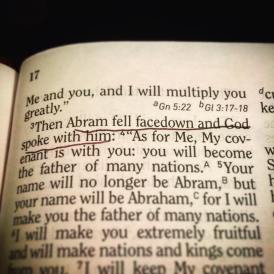
Abraham put himself in a position of submission before God and God spoke to him.

17308967_1283375155081111_2298458613775755243_n

I love that Abraham put himself in a position of submission. When we see God for who He is our only response can be submission. When we see that His love is great, when we see that His righteousness is great, and when we see that His holiness is great our only response can be submission because we see that we are not but that He is.

Worship is partly an act of submission to God. When we think worship we typically think singing or even monetary offerings but worship is submitting to God and acknowledging that He is great. There are so many ways we can worship God and honestly I would rather not list some here because I don’t want to stifle your creativity but instead inspire you to find ways to worship God today.

I would encourage everyone to take some time to read something in your Bibles. Pick two or three chapters and read them straight through with a prayerful heart and just see what God would say to you. Then respond with worship to Him. I am sure He will speak to you on how you can worship Him. The important thing is that you submit to Him and acknowledge His greatness today.

How marvelous God’s greatness,
How glorious His might!
To this the world bears witness
In wonders day and night.
In form of flower and snowflake,
In morn’s resplendent birth,
In afterglow at even,
In sky and sea and earth.

– Valdimar Briem

Just a thought,

Mike

Book Of James

I know a lot of people who are looking for wisdom, direction, peace, and a word from God about their life right now. I wish I had answers but I do not. What I do have is an idea. I am going to read the book of James every day for the next seven days. I challenge you to join me. You can read it from your Bible or read it here it makes no difference. The important thing is that you read it every day at least once a day. More important than just reading it I highly recommend you pray before you read it, while you read it, and after you read it. Press into God during this time and see what happens.

https://www.biblegateway.com/passage/?search=James+1&version=HCSB

James 1:1-27 (HCSB)
1 James, a slave of God and of the Lord Jesus Christ: To the 12 tribes in the Dispersion. Greetings. 2 Consider it a great joy, my brothers, whenever you experience various trials,
3 knowing that the testing of your faith produces endurance. 4 But endurance must do its complete work, so that you may be mature and complete, lacking nothing. 5 Now if any of you lacks wisdom, he should ask God, who gives to all generously and without criticizing, and it will be given to him. 6 But let him ask in faith without doubting. For the doubter is like the surging sea, driven and tossed by the wind. 7 That person should not expect to receive anything from the Lord. 8 An indecisive man is unstable in all his ways. 9 The brother of humble circumstances should boast in his exaltation, 10 but the one who is rich ⌊should boast⌋ in his humiliation because he will pass away like a flower of the field. 11 For the sun rises with its scorching heat and dries up the grass; its flower falls off, and its beautiful appearance is destroyed. In the same way, the rich man will wither away while pursuing his activities. 12 A man who endures trials is blessed, because when he passes the test he will receive the crown of life that God has promised to those who love Him. 13 No one undergoing a trial should say, “I am being tempted by God.” For God is not tempted by evil, and He Himself doesn’t tempt anyone. 14 But each person is tempted when he is drawn away and enticed by his own evil desires. 15 Then after desire has conceived, it gives birth to sin, and when sin is fully grown, it gives birth to death. 16 Don’t be deceived, my dearly loved brothers. 17 Every generous act and every perfect gift is from above, coming down from the Father of lights; with Him there is no variation or shadow cast by turning. 18 By His own choice, He gave us a new birth by the message of truth so that we would be the firstfruits of His creatures. 19 My dearly loved brothers, understand this: Everyone must be quick to hear, slow to speak, and slow to anger, 20 for man’s anger does not accomplish God’s righteousness. 21 Therefore, ridding yourselves of all moral filth and evil, humbly receive the implanted word, which is able to save you. 22 But be doers of the word and not hearers only, deceiving yourselves. 23 Because if anyone is a hearer of the word and not a doer, he is like a man looking at his own face in a mirror. 24 For he looks at himself, goes away, and immediately forgets what kind of man he was. 25 But the one who looks intently into the perfect law of freedom and perseveres in it, and is not a forgetful hearer but one who does ⌊good⌋ works—this person will be blessed in what he does. 26 If anyone thinks he is religious without controlling his tongue, then his religion is useless and he deceives himself. 27 Pure and undefiled religion before our God and Father is this: to look after orphans and widows in their distress and to keep oneself unstained by the world.

James 2:1-26 (HCSB)
1 My brothers, do not show favoritism as you hold on to the faith in our glorious Lord Jesus Christ. 2 For example, a man comes into your meeting wearing a gold ring and dressed in fine clothes, and a poor man dressed in dirty clothes also comes in. 3 If you look with favor on the man wearing the fine clothes and say, “Sit here in a good place,” and yet you say to the poor man, “Stand over there,” or, “Sit here on the floor by my footstool,” 4 haven’t you discriminated among yourselves and become judges with evil thoughts? 5 Listen, my dear brothers: Didn’t God choose the poor in this world to be rich in faith and heirs of the kingdom that He has promised to those who love Him? 6 Yet you dishonored that poor man. Don’t the rich oppress you and drag you into the courts? 7 Don’t they blaspheme the noble name that was pronounced over you ⌊at your baptism⌋? 8 Indeed, if you keep the royal law prescribed in the Scripture, Love your neighbor as yourself, you are doing well. 9 But if you show favoritism, you commit sin and are convicted by the law as transgressors. 10 For whoever keeps the entire law, yet fails in one point, is guilty of ⌊breaking it⌋ all. 11 For He who said, Do not commit adultery, also said, Do not murder. So if you do not commit adultery, but you do murder, you are a lawbreaker. 12 Speak and act as those who will be judged by the law of freedom. 13 For judgment is without mercy to the one who hasn’t shown mercy. Mercy triumphs over judgment. 14 What good is it, my brothers, if someone says he has faith but does not have works? Can his faith save him? 15 If a brother or sister is without clothes and lacks daily food 16 and one of you says to them, “Go in peace, keep warm, and eat well,” but you don’t give them what the body needs, what good is it? 17 In the same way faith, if it doesn’t have works, is dead by itself. 18 But someone will say, “You have faith, and I have works.” Show me your faith without works, and I will show you faith from my works. 19 You believe that God is one; you do well. The demons also believe—and they shudder.
20 Foolish man! Are you willing to learn that faith without works is useless? 21 Wasn’t Abraham our father justified by works when he offered Isaac his son on the altar? 22 You see that faith was active together with his works, and by works, faith was perfected. 23 So the Scripture was fulfilled that says, Abraham believed God, and it was credited to him for righteousness, and he was called God’s friend. 24 You see that a man is justified by works and not by faith alone.
25 And in the same way, wasn’t Rahab the prostitute also justified by works when she received the messengers and sent them out by a different route? 26 For just as the body without the spirit is dead, so also faith without works is dead.

James 3:1-18 (HCSB)
1 Not many should become teachers, my brothers, knowing that we will receive a stricter judgment, 2 for we all stumble in many ways. If anyone does not stumble in what he says, he is a mature man who is also able to control his whole body. 3 Now when we put bits into the mouths of horses to make them obey us, we also guide the whole animal. 4 And consider ships: Though very large and driven by fierce winds, they are guided by a very small rudder wherever the will of the pilot directs. 5 So too, though the tongue is a small part ⌊of the body⌋, it boasts great things. Consider how large a forest a small fire ignites. 6 And the tongue is a fire. The tongue, a world of unrighteousness, is placed among the parts of our ⌊bodies⌋. It pollutes the whole body, sets the course of life on fire, and is set on fire by hell. 7 Every sea creature, reptile, bird, or animal is tamed and has been tamed by man, 8 but no man can tame the tongue. It is a restless evil, full of deadly poison. 9 We praise our Lord and Father with it, and we curse men who are made in God’s likeness with it. 10 Praising and cursing come out of the same mouth. My brothers, these things should not be this way. 11 Does a spring pour out sweet and bitter water from the same opening? 12 Can a fig tree produce olives, my brothers, or a grapevine ⌊produce⌋ figs? Neither can a saltwater spring yield fresh water. 13 Who is wise and has understanding among you? He should show his works by good conduct with wisdom’s gentleness. 14 But if you have bitter envy and selfish ambition in your heart, don’t brag and deny the truth. 15 Such wisdom does not come from above but is earthly, unspiritual, demonic. 16 For where envy and selfish ambition exist, there is disorder and every kind of evil. 17 But the wisdom from above is first pure, then peace-loving, gentle, compliant, full of mercy and good fruits, without favoritism and hypocrisy. 18 And the fruit of righteousness is sown in peace by those who cultivate peace.

James 4:1-17 (HCSB)
1 What is the source of wars and fights among you? Don’t they come from the cravings that are at war within you? 2 You desire and do not have. You murder and covet and cannot obtain. You fight and war. You do not have because you do not ask. 3 You ask and don’t receive because you ask with wrong motives, so that you may spend it on your evil desires. 4 Adulteresses! Don’t you know that friendship with the world is hostility toward God? So whoever wants to be the world’s friend becomes God’s enemy. 5 Or do you think it’s without reason the Scripture says that the Spirit who lives in us yearns jealously? 6 But He gives greater grace. Therefore He says: God resists the proud, but gives grace to the humble. 7 Therefore, submit to God. But resist the Devil, and he will flee from you. 8 Draw near to God, and He will draw near to you. Cleanse your hands, sinners, and purify your hearts, double-minded people! 9 Be miserable and mourn and weep. Your laughter must change to mourning and your joy to sorrow. 10 Humble yourselves before the Lord, and He will exalt you. 11 Don’t criticize one another, brothers. He who criticizes a brother or judges his brother criticizes the law and judges the law. But if you judge the law, you are not a doer of the law but a judge. 12 There is one lawgiver and judge who is able to save and to destroy. But who are you to judge your neighbor? 13 Come now, you who say, “Today or tomorrow we will travel to such and such a city and spend a year there and do business and make a profit.” 14 You don’t even know what tomorrow will bring—what your life will be! For you are ⌊like⌋ smoke that appears for a little while, then vanishes. 15 Instead, you should say, “If the Lord wills, we will live and do this or that.” 16 But as it is, you boast in your arrogance. All such boasting is evil. 17 So it is a sin for the person who knows to do what is good and doesn’t do it.

James 5:1-20 (HCSB)
1 Come now, you rich people! Weep and wail over the miseries that are coming on you.
2 Your wealth is ruined and your clothes are moth-eaten. 3 Your silver and gold are corroded, and their corrosion will be a witness against you and will eat your flesh like fire. You stored up treasure in the last days! 4 Look! The pay that you withheld from the workers who reaped your fields cries out, and the outcry of the harvesters has reached the ears of the Lord of Hosts.
5 You have lived luxuriously on the land and have indulged yourselves. You have fattened your hearts for the day of slaughter. 6 You have condemned—you have murdered—the righteous man; he does not resist you. 7 Therefore, brothers, be patient until the Lord’s coming. See how the farmer waits for the precious fruit of the earth and is patient with it until it receives the early and the late rains. 8 You also must be patient. Strengthen your hearts, because the Lord’s coming is near. 9 Brothers, do not complain about one another, so that you will not be judged. Look, the judge stands at the door! 10 Brothers, take the prophets who spoke in the Lord’s name as an example of suffering and patience. 11 See, we count as blessed those who have endured. You have heard of Job’s endurance and have seen the outcome from the Lord. The Lord is very compassionate and merciful. 12 Now above all, my brothers, do not swear, either by heaven or by earth or with any other oath. Your “yes” must be “yes,” and your “no” must be “no,” so that you won’t fall under judgment. 13 Is anyone among you suffering? He should pray. Is anyone cheerful? He should sing praises. 14 Is anyone among you sick? He should call for the elders of the church, and they should pray over him after anointing him with olive oil in the name of the Lord. 15 The prayer of faith will save the sick person, and the Lord will restore him to health; if he has committed sins, he will be forgiven. 16 Therefore, confess your sins to one another and pray for one another, so that you may be healed. The urgent request of a righteous person is very powerful in its effect. 17 Elijah was a man with a nature like ours; yet he prayed earnestly that it would not rain, and for three years and six months it did not rain on the land. 18 Then he prayed again, and the sky gave rain and the land produced its fruit. 19 My brothers, if any among you strays from the truth, and someone turns him back, 20 let him know that whoever turns a sinner from the error of his way will save his life from death and cover a multitude of sins.

Overdone

There are a lot of things that could be discussed in Ephesians chapter 1 but I want to focus on right now is found in verses 7 and 8 and verse 19. Now ideally, you do not want to just pull verses out willy nilly but these, sort of capture the essence of what is being discussed in chapter 1.

First in regards to verses 7 and 8 we can read and see that not only does God give us grace but he lavishes it upon us as the HCSB says. The word in the Greek is perisseuō and it means to exceed a fixed number of measure, to be left over and above a certain number or measure or to make to abound. I want to take just a minute on that.

Not only does God give us grace but it gives it to us in excess, He literally over does it. God’s love is so great and so big that His grace towards us is overboard. If you have ever fallen in love with someone then you can probably relate to that idea. You not only show love but you show it in abundance. You go out of your way to show that love you feel and have no problem with it. That is God’s grace towards us it is over and above. 1 John says that God is love which means He does not do love, He does not show love, but instead He is love. He is love, He is holy, and His love is a holy love. He has desires and plans but that all come from a place of Him being.

The second thing is that everything God does towards, for, and through us is done by His vast strength. God is so good and so gracious towards us that He knows that He cannot only give us His grace but He needs to also hold us up, give us wisdom, and show us His ways by His own power. Paul goes on to say that this power is the power that raised the Messiah from the grave. What Paul is getting at is that if God can raise Christ from the grave then surely, He can keep you and give you wisdom. If we think of it in terms of difficulty (not that anything is hard for God) which is harder; to know something or raise the dead?

The point is this; God gives you a crazy amount of grace, literally more than you will ever need and then says I will keep you and give you my strength so you just rely on me. He has covered all the bases and all we must do is let Him do His work. Now the catch is that this a partnership. God will give you the wisdom, God will give you grace, God will give you the strength, but you still need to do what He says. It will not always be easy Jesus promised that but He said we will not be alone. We still need to go where He says to go, say what He says to say, and do what He says to do but we don’t do it alone or by our own strength. Once we get that it gets a whole lot better.

Just a thought,

Mike


Solomon, wise but weary

Just a little Sunday morning Bible Study

Chapters 1 through 10 of 1 Kings record Solomon seeking God and following after God. Solomon was wiser than anyone who has ever lived. He was also rich beyond belief. He had palaces and gold by the tons. It says that he did not use silverware but goldware because he was so wealthy. Solomon had everything but it was not enough for him. In all his wisdom in the end he did not apply that wisdom to himself.

In the New Testament we read in Galatians (6:9) that we should not grow weary, or tired, in doing good because at the right time we will receive a harvest. It is not easy always doing the right thing, and it is not easy to help others but it is right. We cannot grow tired like Solomon did. We cannot give up. We cannot forget the promises of God.

Solomon had an eye for the ladies but especially for the ladies God told him not to take as wives. He followed after their gods and broke covenant with the God of Israel. It always happens this way too. When we start to follow after things we should not they lead us to other things we should follow. There are somethings that are straight sin no questions about it but there are other things too. Things that maybe you should not do because they lead you down a path you should not go. Sin and these things will take your focus of God and end the end lead you down a path where you following after other things that take the place if your calling, your future, and maybe even your God.

Just a thought,
Mike

Just Keep Swinging

img_3426

One of my all-time favorite stats come from Hank Aaron and while you might think that it is his home run record of 755 it is not. It is also not his hits, doubles, triples, or RBIs. All of those are impressive but his at-bats are what really get me. Hank Aaron had 12,364 at-bats. Think about that for a second, it took 12,364 at-bats to get his record 755 home runs. That means he was more likely to not get a home run than to get one. Now in all fairness, his slugging percentage is .555 which means there was a good chance he was going to hit something but we don’t typically think about those we just want the home run.

When I think about this I think about Philippians 3:12-14 where Paul basically says “I am not fully mature yet but I keep swinging.” Paul is talking to the Philippians about unity, humility, and perseverance and those are things I know I need to be reminded of in my own life. The point is we are not done yet and we need to keep swinging. My goal is to get to heaven and hear my God say “well done good and faithful servant.” That is what I want more than anything. When I wake up in the morning my prayer is that God will reveal to me His will and ways. Now when I go to bed I evaluate and if I hit it then I rejoice, and if I miss the mark then I pray for strength for tomorrow. I pray that I can keep swinging.

I want to hit home runs at every bat and I want you to hit home runs at every bat. I want you to succeed and that the things God has called you to. I want to shine like stars in the darkness but that will only happen if I keep swinging and it will only happen in your like if you keep swinging. You will not hit every pitch no one ever does. You will strike out more than you hit but you have to swing, you have to keep trying, and you have to wake up every morning and say “Thank you, Lord, for another at-bat.”

There is a new year right around the corner and it will be hard at times and amazing at times but only if you keep pressing forward to the goal promised by God’s heavenly call in Christ Jesus.

Just a thought,

Mike

The Medium is the Message

According to Marshall McLuhan, “The medium is the message.”  Have you ever heard this saying? Have you ever wondered what it meant? What is a medium? Moreover, what in the world does this have to do with the Bible?

First, what is a medium? Per Webster’s dictionary , a medium is a means of effecting or conveying something.

What does it mean that the medium is the message? Well to be honest when I first heard this saying I thought it was about how the medium determines how the message is communicated. If we look at water as the message and a balloon as the medium water takes the shape of the balloon. Water is not a balloon but it takes the shape of the balloon so in the same way the method (medium) of communication determines the how the message is delivered. Now I am not saying this is not true because to a large extent that is true the medium determines how the message is communicated, however, that is not nearly as important as the fact that the medium itself is the message.

Each medium communicates a very specific message and not only that but the medium shapes the way you view and interact with the world. Most people have a primary medium they prefer and that medium has rules, standards, points of view, and more importantly functions. The medium you choose will influence your other choices in life. Notice I said influence and not control because while some might suggest that your medium dominates your decisions I am not willing to go that far. I know you might still be wondering what this has to do with the Bible but track with me for a moment.

I do not intend to debate the merits of various electronic mediums except to point out a few things. If we look at a medium like texting we see that the message is, or at least could be, get your point across as quickly as possible. Full sentences are not needed and are somewhat prohibitive in this. The point of a text message is not to get across a full idea but the essence of what you want to say. You would not say “I think that is a good idea we should probably do that” but “k.” The problem is that the messages communicated through this medium are often taken wrong or out of context. The message of this medium is not to understand complex thoughts but to quickly communicate. A problem that we have is people have mistaken the message to be “here is an effective way to communicate our thoughts” but that is not the message. We have mistaken the message and in doing so misapplied the use of the medium. Texting is not meant for in-depth communicate but for short messaging hence the name SMS (short message service).

Another medium is the TV. The TV is by far a much larger medium and much more influential than texting but it still has a message. Yes, the TV delivers many individual messages but the TV has an overarching message as a medium. What is that message? I am going with relax and be entertained. I think there is also a possibility that the message is to stop thinking or at a minimum think less and think without context (that is without reference). But that is a little combative so I will just work off the entertainment hypothesis. If the message is to be entertained then we have to make sure, like texting, we understand that. Yes, there are programs not specifically designed to entertain but they will still have an entertainment factor in order to compete for your viewership.

So again, the question that must be asked is what does this have to do with the Bible? The Bible says in Hebrews 1:3 that Jesus is the exact or express image of the invisible God. It also says that He is the image of God in Colossians 1:7, that He is the Word of God in John 1:1. It is important to know that the medium is the message because Jesus is the medium of the Father. Jesus conveys something from the Father. When we understand that we can look to see what the message is and the message is clear. God loves you, God desires a relationship with you, and God desires you. The message in the person of Christ is you are wanted and loved. You are forgiven. Jesus says for God so loved the world that he gave His only Son so that everyone who believes in Him would have eternal life and that is a powerful message.

Now if mediums not only have a message but shape how you view and interact with the world then how does the message of Jesus as the Father’s medium affect and shape your interactions with the world? First off to be clear it should. It should drastically shape your world view. Everything you do should be Christocentric meaning that it has Christ at the center. The way you treat your family should be Christ-centered.  The way you treat strangers should be Christ-centered. The way you think should be Christ-centered. Everything should be Christ-centered because you are centered in Christ. As a Christian, you not only have a relationship with Jesus but you are in Him and He is in you. But the questions was not how should it affect you but how does it affect you? You are the only one who can answer that question.

If it is true that the medium is the message, then the fact that Jesus is the medium of God is huge. There is no greater message that can be delivered. It is important to not misapply the message that is Jesus as many have done. Jesus as the medium and the message is paramount in understanding God. If you want to know God better then it comes through knowing Christ.


Just a thought,

Mike

Mike in a Box

I have an aversion to religious rituals in my life. This aversion is so strong I even call it ritualism. Anytime I think something might become a ritual I avoid it at all cost. I struggle with a consistent morning devotional because I am afraid I might just start going through the motions. I am afraid of losing the spiritual connection to the action so often times I avoid beginning it in the first place. I think to myself instead: Michael you have the Holy Spirit, you can pray and fellowship with God anytime. This is true I can pray and fellowship with God anytime I like, but do I?

Before I continue I want to let you know that I plan on using a few analogies and to remind you that analogies eventually break down. Some analogies are better than others and some hold up longer than others but that is their nature. An analogy can only go so far because they only have partial similarities and so it is with the ones I will use.

My aversion to rituals is, by and large, only affected by spiritual things. I brush my teeth every morning, I go to the gym most mornings, I wash my beard two times a week, and so on. Now you might be thinking that these things are not rituals but routines and you would be right they are routines. A routine as defined by Google – a sequence of actions regularly followed; a fixed program. Every morning I have the same routine: I wake up, get my robe, drink my coffee, read my emails, check the verse of the day, check Facebook, re-read the verse of the day because I forgot already, and so on. Same thing every morning. There are slight variations depending on the day but you get the picture. If I was the star of a TV show my morning routine could be the opening credits because it does not change.

Another routine I have is I go to the gym four days a week. I do different exercises each day but there is still a routine in there. I have thoughts about not going to the gym because I don’t feel like it, especially on Fridays, but I know it is good for me so I go. I am usually glad I did. So why if I can see the value of routines in my daily physical life am I so hesitant to put spiritual routines in place? Why do I call routines rituals in my my spiritual life? The answer is…I have no idea.

That is the point I hit about three weeks ago. I was dumbfounded at why one was seen as good and the other as bad. Yes setting aside specific prayer times could become dull and robotic but the same could happen at the gym. True my reading could turn into a “must” instead of a “want” but that can happen in any area. The reason it doesn’t is because of self-control and desire. I desire to get stronger or to learn an instrument. The desire trumps the problem of dullness. Then at times when the desire is not as strong self-control takes over and keeps me on track. Things do not become ritualistic because you choose to not allow that to happen. So I made a choice.

Three weeks ago I set three timers on my phone that simply say prayer time. When these timers go off I stop what I am doing (if I can) and take a couple of minutes to read something and pray. I am happy to say that most days I hit all three times. There are days when due to my schedule I simply cannot do it and that is OK. I still do my bigger readings and bigger prayer times but these three times are about stopping to refocus my attention on Christ. It is not about doing a Bible study or getting a breakthrough in an area of my life. It is simply about stopping to spend a few minutes with Jesus.

I was so afraid of putting God in a box that I did not realize something very important. While God does not belong in a box but I might. We are always told to think outside of the box, to be free with our worship, to live in the moment, and to listen to the Spirit. That is great and I try to be like that but what about self-control. What if you find yourself wanting to be like that but not having the time every day to do that. Am I always spontaneous with my wife? What about with my kids? No, because there are times when you need to make time for them. Times when you are busy. You want to spend time with your loved ones but your schedule does not allow for you to do something in the moment. In those times you have to be intentional about it. Our walk with Jesus is similar, we need to be intentional about it. Sometimes we need to put ourselves in a box so that we can do the thing we want to do.

So I have put myself in a box and I have to say it is more comfortable in here than I thought.

Just a thought,

Mike